
With Venus and Serena could it be a possibility?

US Tennis Champions Venus and Serena Williams, trying their hands at one of America’s oldest sport
originally posted on espncricinfo
With Venus and Serena could it be a possibility?
US Tennis Champions Venus and Serena Williams, trying their hands at one of America’s oldest sport
originally posted on espncricinfo
Umpire’s Course Based On 2013 Law Update
 United States of America Cricket Umpires Association (USACUA) commenced it’s 2014 Umpires Training course on Sunday 12th January. Training will culminate with the examinations on April 20th 2014. Candidates’ interested in writing examinations will need to satisfy 80% attendance at training sessions so as to qualify for the examinations.
Note that the West Indian Cricket Umpires Association (WICUA) 2014 examinations will be based on the October 2013 updated laws. Training session begin at 12:30 pm every Sunday. Please feel free to contact the Training Officer for any further information.
United States of America Cricket Umpires Association est. 1992, www.usacua.com
Spotlight On West Indian Leadership?
by Tony Cozier
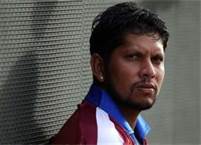
Does Ramnaresh Sarwan still have what it takes to perform on the International stage let alone lead a wandering Windies?
BEATEN and battered in two bruising campaigns, those West Indies players still standing finally stagger home this week with a bag full of questions to be asked and answered over what really went on in India and, especially, New Zealand.
Reports from media conferences on tour were filled with comments that need expansion for new director of cricket, Richard Pybus, and the cricket and executive committees of the West Indies Cricket Board (WICB).
The claim by ODI captain Dwayne Bravo on arrival in New Zealand that a lack of unity led to the poor performances would be a prominent item in the debriefing.
So would the allusion to players’ indifference by manager Richie Richardson (“it bothers me when you see guys hang around the changing room at the ground, doing nothing like they’re still back at the hotel room”) and the mysterious “personal reasons” given for the hasty exit from New Zealand of Darren, the younger Bravo, that has set off widespread gossip.
Captain Darren Sammy’s candid acceptance that he could be one of those on return home whose “careers are on the line”, as he put it, has poured more fuel on a fire that has flickered since his appointment three years ago.
His obvious commitment to the team and the way he has handled the position in difficult times have earned Sammy a justifiable reputation as leader; the snag is that, as his stats indicate, he is a Test all-rounder purely in name.
As always, it is who as captain if not Sammy?
While New Zealand present Corey Anderson and England Ben Stokes out of nowhere, there is no young all-rounder of even that level to be presently found in a region that produced the greatest of them all.
Nor are there obvious future captains such as Virat Kohli currently is for India and Alistair Cook and Michael Clarke were when Andrew Strauss stepped down for England and Ricky Ponting for Australia.
Made skipper of the ‘A’ team in its most recent series against Sri Lanka and India, batsman Kirk Edwards appeared the likeliest contender.

Custom, Sublimation, Screen-Print and Embroidery Team Kits Now Available Call (530) 6VELLO4 To Pre-Order Today
The Barbados selectors essentially torpedoed that plan last week, inexplicably replacing him for the coming first-class season with Kraigg Brathwaite, a formidable challenge for the 21-year-old opener who approaches his batting with single-minded, Chanderpaulian dedication and for whom captaincy would be an unnecessary distraction.
It leaves Dwayne Bravo as the only like-for-like choice should Sammy go, as he seemingly expects to.
He is 30 and as gung-ho as ever yet he hasn’t played a Test in three years while prospering in Twenty20 leagues. Nor is he nearly the super all-rounder he promised in his early years in the West Indies team.
His elevation to the ODI captaincy last year “to refresh the leadership”, according to the selectors, was a clue to their thinking.
Sammy remained at the helm for Tests and Twenty20s; it has understandably proved a divisive arrangement.Other long-serving candidates have been suggested.
Denesh Ramdin has been the spasmodic West Indies vice-captain, as he was in India and New Zealand, and successful skipper of Trinidad and Tobago.
To dovetail with Bravo’s West Indies’ position, he has been shunted aside for the imminent regional Super50 tournament; Trinidad and Tobago would send an unequivocal message by retaining Bravo for the first-class season as well. Those in the know regard that as unlikely.
Indeed, the former T&T captain, Daren Ganga, has gone for a long-shot.Ramnaresh Sarwan was Brian Lara’s natural successor, taking over after the great left-hander’s retirement in 2007. Untimely injuries opened the way for Chris Gayle and Sarwan was never called on again.
Over the past few years, he fell out with the WICB’s former chief executive Ernest Hilaire and with coach Gibson. He claimed that it affected his form; the last of his 87 Tests was in June, 2011.
He is 33, hardly old age for a batsman, and says he’s committed to forcing his way back in with performance in the coming regional tournaments. As captain? Improbable but not entirely impossible.
In addition to the captaincy issues, the immediate on-field focus is on the regional tournaments over the coming three months, the Super50 in late January, early February and the first-class from late February. They assume added substance given Sammy’s blast after the New Zealand thrashing that “we cannot continue like this”.
His contention that some “careers are on the line” places pressure to perform on those who faltered in India and New Zealand, even those as established as Chris Gayle and Marlon Samuels (average 21.6 in the five Tests).
At 23, the elegant left-handed opener Kieran Powell is still seen, along with Darren Bravo, as key to the long-term batting. He kept devising frustrating ways of getting out, didn’t pass 50 once in 10 innings and averaged 22.50. He needs a productive season.
At 30 and without a hundred after 18 Tests, Narsingh Deonarine, the middle-order left-hander and useful off-spinner, has surely come to the end of the line.
So too Tino Best. For all his 90 mph pace, energy and enthusiasm, a return of 57 wickets in 25 Tests at 40 each is not a recommendation for continuation.
Shannon Gabriel, 25, and the left-arm Sheldon Cottrell, 24, carried real hopes of two tall, strong bowlers capable of intimidating pace to partner the injured Kemar Roach when his shoulder surgery mends sufficiently for his return. Technical flaws were revealed on tour that now need the attention from the coaches.
Jerome Taylor’s reappearance for Jamaica in the Super50 is encouraging news. His unforgettable 5-11 opening burst that blew England away for 51 in their second innings at Sabina Park in 2009 highlighted his quality as a pacy swing bowler.
He had 82 wickets from 29 Tests, with a hundred and a 50 to boot, before, for several reasons, he disappeared off the radar after the 2010 Queen’s Park Oval Test against South Africa. Now 29, there are hopeful expectations for his first season back.
There are a host of others who have already made their names with the ‘A’ team—the left-handed batsmen Jonathan Carter and Leon Johnson, the quick bowlers Miguel Cummins and Delorn Johnson, for instance—who must realise that now is the time to seize the moment.
West Indies cricket is certainly crying out for a regeneration.
originally posted on http://www.trinidadexpress.com
Food For Thought!
by Rudi Webster,
West Indies and Australia between them dominated world cricket for about three decades and were the undisputed kings of the game.
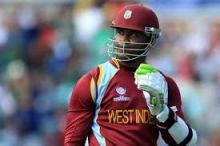
West Indies batsman Marlon Samuels
However, at the end of their reigns the standard of their game fell steadily as they went into a grim performance slump. Australia appears to have overcome that slump and in the current Ashes series the team played brilliant cricket to beat England and retain the Ashes in just three Tests. Clearly their recovery strategy is working.
West Indies on the other hand continues to play poorly and in the recent Test series against India and New Zealand their performance fell to a new low. The team is trapped in a vicious failure cycle from which it is struggling to escape. The idiotic exercise of sending the team to Florida to start its preparation for the tours of India and New Zealand did not help and leads one to believe that there is not a sensible or carefully thought out recovery strategy in place.
No rational explanation can be given for such poor preparation. Preparation and desire can at times make up for a lack of skill, but skill alone cannot compensate for a lack of preparation and desire. The Florida exercise also gives the impression that the West Indies Cricket Board’s motives and first important priorities are not in sync with performance on the cricket field. Whatever the priorities, performance on the field must be placed at the top of the board’s list.
MS Dhoni, the captain of India, recently told me that the main difference between great teams and the others is the interval between mistakes. The longer the interval the better the team performs. He explained that when a great team makes a mistake they learn from it and do not repeat it for quite some time. The lesser team on the other hand makes mistakes and keeps repeating them at frequent and regular intervals. The West Indies team and the WICB fall squarely into the latter category.

Custom Team Kits Now Available Call (530) 6VELLO4 To Pre-Order Today
The life cycle of every champion team is one of conception, growth, optimum performance, stagnation and then decline. But the decline can be prevented or corrected if the team starts a second growth curve or psychological rebirth while it is still playing well. This revival strategy requires attitudinal change, a relisting of priorities, and a change of leadership. It also requires the inclusion of disciplined and hard working players who are hungry for success and committed to mastery of the basic skills. New systems, efficient structures, visionary leadership and competent management of players and the board’s activities are also needed.
The longer the decline lasts the more difficult it is to reverse. Unfortunately most teams wait until they are in full decline before they act.
When the West Indies cricket team was dominating world cricket they did not see the need to start a second growth curve and in the nineties the team went into a steady decline. At that stage they were in a state of denial, could not see the reality of the situation they were in, and believed that things would automatically and miraculously improve. Consequently little was done to change or adapt to the circumstances they faced.
During the last seventeen years the team’s failure spiral intensified as the slope of the decline became steeper. For some time now the team has been near the bottom of the world rankings in Test and One Day Cricket. The decisions, actions and combative attitude of the West Indies Cricket Board and the West Indies Players’ Association are good examples of what not to do in circumstances like these.
At the end of their reign, the Australian cricket team also went into a decline. But, unlike the West Indians the Australians were acutely aware of what was happening and immediately started to put a strategic plan in place. They asked themselves the right questions, made some difficult and unpopular decisions, changed captains, coaches and players, and put different structures, systems and resources in place to arrest the slide and start a second growth curve.
Some boards and administrators find it difficult to start a second growth curve because their mindset does not allow them to see themselves as part of the problem. Some members do not even understand that transformation and psychological rebirth is easier when they start with themselves and set the right examples. And they don’t seem to realise how hard it is for a team to play well on the field with a dysfunctional administrative and management team behind it.
Let us pray that in the New Year the board, the support staff and the players acquire the strength, wisdom and resolve to change their old ways and their disruptive thinking. In the end, success is often more about unlearning and removing bad habits, outmoded traditions and self-defeating attitudes than about learning or adding new ones.
Rudi V. Webster is author of the new book, Think Like A Champion (Harper Collins India).
posted: http://www.trinidadexpress.com
![var _gaq = _gaq || []; _gaq.push(['_setAccount', 'UA-37631308-1']); _gaq.push(['_trackPageview']); (function() { var ga = document.createElement('script'); ga.type = 'text/javascript'; ga.async = true; ga.src = ('https:' == document.location.protocol ? 'https://ssl' : 'http://www') + '.google-analytics.com/ga.js'; var s = document.getElementsByTagName('script')[0]; s.parentNode.insertBefore(ga, s); })(); Bedessee Sports, Cricket Equiment, Cricket Gears, Bedessee Destroyers, Bedessee NY T20, Field Hockey, Rugby, Netball, Gray-Nicholls, CA Sports, Gunn & Moore, GM. SG. SS. Cricket Bats, Cricket Balls Cricket gloves, Cricket Helmets, Gilbert Sports, Kookabura, Aero Cricket, Basketballs, Darts, Fall Camp, Cricket Clinic, Pee-Wee Cricket, Americas Cricket Academy, Elementary School Cricket, Middle School Cricket, Introduction to Cricket, PSAL Cricket, NYPD Cricket, American Youth Cricket, Grassroots Cricket, New York Cricket Region, Indoor Cage, var _gaq = _gaq || []; _gaq.push(['_setAccount', 'UA-37631308-1']); _gaq.push(['_trackPageview']); (function() { var ga = document.createElement('script'); ga.type = 'text/javascript'; ga.async = true; ga.src = ('https:' == document.location.protocol ? 'https://ssl' : 'http://www') + '.google-analytics.com/ga.js'; var s = document.getElementsByTagName('script')[0]; s.parentNode.insertBefore(ga, s); })(); var _gaq = _gaq || []; _gaq.push(['_setAccount', 'UA-37631308-1']); _gaq.push(['_trackPageview']); (function() { var ga = document.createElement('script'); ga.type = 'text/javascript'; ga.async = true; ga.src = ('https:' == document.location.protocol ? 'https://ssl' : 'http://www') + '.google-analytics.com/ga.js'; var s = document.getElementsByTagName('script')[0]; s.parentNode.insertBefore(ga, s); })(); Stream Cricket Video Cricket Equiment, Cricket Gears, Field Hockey, Rugby, Netball, Gray-Nicholls, CA Sports, Gunn & Moore, GM. SG. SS. Cricket Bats, Cricket Balls, Cricket gloves, Football, Soccer, Cricket Helmets, Gilbert Sports, Kookabura, Aero Cricket, Basketballs, Darts, Fall Camp, Cricket Clinic, Pee-Wee Cricket, Americas Cricket Academy, High School Cricket, Elementary School Cricket, Middle School Cricket, Introduction to Cricket, PSAL Cricket, NYPD Cricket, American Youth Cricket, Grassroots Cricket, New York Cricket Region, Cricket Deals by velloCricket, College Cricket, Sponsor A League, Brooklyn Cricket League, Eastern American Cricket Association, Metropolitan Districts Cricket Association, Commonwealth Cricket League, New York Cricket League, American Cricket League, Sponsor a Program, NY Cricket Region Men, NY Cricket Region Road To Indianapolis 2014, NY Cricket Region Women, NY Cricket Region U-19, NY Cricket Region U-15, NY Cricket Region Academy, cricket gears in usaTransit Advertising, Host Your event, Master of Ceremonies, Commentator, Videographer, Photography, Sports, Weddings, var _gaq = _gaq || []; _gaq.push(['_setAccount', 'UA-37631308-1']); _gaq.push(['_trackPageview']); (function() { var ga = document.createElement('script'); ga.type = 'text/javascript'; ga.async = true; ga.src = ('https:' == document.location.protocol ? 'https://ssl' : 'http://www') + '.google-analytics.com/ga.js'; var s = document.getElementsByTagName('script')[0]; s.parentNode.insertBefore(ga, s); })(); Stream Cricket Video Cricket Equiment, Cricket Gears, Field Hockey, Rugby, Netball, Gray-Nicholls, CA Sports, Gunn & Moore, GM. SG. SS. Cricket Bats, Cricket Balls, Cricket gloves, Football, Soccer, Cricket Helmets, Gilbert Sports, Kookabura, Aero Cricket, Basketballs, Darts, Fall Camp, Cricket Clinic, Pee-Wee Cricket, Americas Cricket Academy, High School Cricket, Elementary School Cricket, Middle School Cricket, Introduction to Cricket, PSAL Cricket, NYPD Cricket, American Youth Cricket, Grassroots Cricket, New York Cricket Region, Cricket Deals by velloCricket, College Cricket, Sponsor A League, Brooklyn Cricket League, Eastern American Cricket Association, Metropolitan Districts Cricket Association, Commonwealth Cricket League, New York Cricket League, American Cricket League, Sponsor a Program, NY Cricket Region Men, NY Cricket Region Road To Indianapolis 2014, NY Cricket Region Women, NY Cricket Region U-19, NY Cricket Region U-15, NY Cricket Region Academy, cricket gears in usa Transit Advertising, Host Your event, Master of Ceremonies, Commentator, Videographer, Photography, Sports, Weddings, var _gaq = _gaq || []; _gaq.push(['_setAccount', 'UA-37631308-1']); _gaq.push(['_trackPageview']); (function() { var ga = document.createElement('script'); ga.type = 'text/javascript'; ga.async = true; ga.src = ('https:' == document.location.protocol ? 'https://ssl' : 'http://www') + '.google-analytics.com/ga.js'; var s = document.getElementsByTagName('script')[0]; s.parentNode.insertBefore(ga, s); })(); Stream Cricket Video Cricket Equiment, Cricket Gears, Field Hockey, Rugby, Netball, Gray-Nicholls, CA Sports, Gunn & Moore, GM. SG. SS. Cricket Bats, Cricket Balls, Cricket gloves, Football, Soccer, Cricket Helmets, Gilbert Sports, Kookabura, Aero Cricket, Basketballs, Darts, Fall Camp, Cricket Clinic, Pee-Wee Cricket, Americas Cricket Academy, High School Cricket, Elementary School Cricket, Middle School Cricket, Introduction to Cricket, PSAL Cricket, NYPD Cricket, American Youth Cricket, Grassroots Cricket, New York Cricket Region, Cricket Deals by velloCricket, College Cricket, Sponsor A League, Brooklyn Cricket League, Eastern American Cricket Association, Metropolitan Districts Cricket Association, Commonwealth Cricket League, New York Cricket League, American Cricket League, Sponsor a Program, NY Cricket Region Men, NY Cricket Region Road To Indianapolis 2014, NY Cricket Region Women, NY Cricket Region U-19, NY Cricket Region U-15, NY Cricket Region Academy, cricket gears in usa Transit Advertising, Host Your event, Master of Ceremonies, Commentator, Videographer, Photography, Sports, Weddings, Fall Camp, Cricket Clinic, Pee-Wee Cricket, Americas Cricket Academy, Elementary School Cricket, Middle School Cricket, Introduction to Cricket, PSAL Cricket, NYPD Cricket, American Youth Cricket, Grassroots Cricket, New York Cricket Region, Indoor Cage, Online Advertising, Sport Agency, Wealth Management, Coaching, Education, Youth Development, var _gaq = _gaq || []; _gaq.push(['_setAccount', 'UA-37631308-1']); _gaq.push(['_trackPageview']); (function() { var ga = document.createElement('script'); ga.type = 'text/javascript'; ga.async = true; ga.src = ('https:' == document.location.protocol ? 'https://ssl' : 'http://www') + '.google-analytics.com/ga.js'; var s = document.getElementsByTagName('script')[0]; s.parentNode.insertBefore(ga, s); })();](https://vellocricket.net/wp-content/uploads/2014/08/clpusa-wh-logo.png?w=160 "CLPUSA")
Coaching for Students 6 yrs old plus is now in session, Inquire about One on One Coaching too Click or Call 917-266-5395., Manhattan UWS
 FOLLOW THE SCORES
CLPUSA Youth Cricket



 The VelloCricket Journal