Ex-ICC boss: Big Three plan sheer madness

Mani: Big 3 Plan Short-sighted and Exclusive! Potential for impact in US and Chinese Economies!

Former International Cricket Council (ICC) president Ehsan Mani says it would be “sheer madness” for the governing body to effectively hand over control of the sport to India, Australia and England.

BCCI's Head Honcho, N. Srinivasan, Big 3 Mastermind

BCCI’s Head Honcho, N. Srinivasan, Big 3 Mastermind

It was announced after a board meeting in Dubai last month that a new five-member ICC executive committee would be established to include representatives from the ECB, cricket Australia and the Board of Control for Cricket in India. However, the plan has received widespread criticism. The current executive committee includes representatives from all ten Test-playing countries, and some suggest the new proposals will allow the ‘Big Three’ to take over at the expense of other cricketing nations.

“If these proposals are accepted then the Big Three will decide how the ICC runs and what it does,” Mani told Reuters in a telephone interview from his home in Islamabad. “The board of the ICC cricket council will effectively have no powers apart from approving whatever India, Australia and England do. “If these proposals are accepted they are going to be doing severe damage to world cricket. It would seriously affect the credibility of the ICC as the governing body.”

Mani believes three of the ten Test-playing nations will reject the new proposals.
“As far as I know South Africa, Sri Lanka and Pakistan will not vote for it and without those three this cannot go through,” said the 68-year-old businessman who was president of the ICC between 2003-06. “Do you really want to run World Cups and such like without these countries and without South Africa who are the number one-ranked test team in the world? That would be sheer madness.”

India have long been regarded as the traditional powerhouses among the Test-playing nations and the Pakistani says England and Australia might think again about the new proposals if they are rejected. “What will be interesting is what the Big Three will do if the plan is blocked,” said Mani. “Bangladesh and West Indies have only supported the Big Three because they’ve been given the incentive that they will get more tours from these countries, hence more money from television rights.

“I question the morality of that but if this move is blocked, then it will be a serious time for England and Australia to think about how much damage they might be doing to the game just to fall into line with something that India wants.” Mani said the new proposals would encourage a free-for-all scenario to develop in terms of future Test series. “Under the present Future Tours Programme every country is obliged to play every other country in a four-year cycle home and away at least once,” he explained. “What the Big Three are saying is do away with that, let all the countries decide who they will play against, with no obligation to play any of the other members. “So you will have a free-for-all situation that certain countries will misuse to go where they want…it will totally unsettle international cricket because members will only play against countries where they make money,” said Mani. “It would mean they won’t be interested in countries like Bangladesh, Zimbabwe, New Zealand or possibly even West Indies where they will lose money to tour.”

Earlier this week, chairman of the ECB Giles Clarke said the new proposals would help give countries greater financial stability. Yet Mani believes the lesser cricketing nations who are outside the ten Test-playing elite will suffer financially under the new plans. “The Big Three are also proposing to cut the funding of the associate and affiliate members and that will kill off the development programme of the ICC,” he said. “What they are saying is we’ll give US$210 million to associate members, half of that will go to the top six countries so the other 90-odd will have to share US$105 million. “What they further say … is that the new ICC executive board will decide which of those countries will get money and how much—that goes against the very constitution of the ICC,” Mani added.

“The constitution says the associate members will get 25 per cent of ICC revenues. It doesn’t give the board of the ICC the right to decide who gets how much. “What the executive board doesn’t appreciate is that although these countries don’t necessarily play a high standard of cricket, there are big economies involved like China and the United States that over time with the right sort of investment could give the ICC a huge amount of returns in terms of money.” —ESPN Cricinfo

Posted in Headlines, News | Leave a comment

USACA Launch Junior Eagles Fan Club

jr eagleThe United States of America Cricket Association (USACA) has launched a brand new kid’s fan club called the US Cricket Junior Eagles! The fan clubs is designed to provide children with the opportunity to be part of US cricket and to establish a group of positive youngsters that love their cricket.

“Junior” is an American bald eagle and the mascot of the Junior Eagles fan club. “Junior” loves cricket and wants to encourage as many kids aged between 4 and 15 years of age to join up and join in the fun. Each Junior Eagles member receives as special membership package that includes;

• A Team USA Cap
• Invitations to the 2014 USACA Summer Camps and discounts on entry.
• A Team USA Poster
• Two (2) US Cricket Junior Eagle Stickers
• A US Cricket birthday gift
• A US Cricket Junior Eagles Membership Certificate
• Discounts on purchasing other equipment (ie. bats, gloves, stumps, Club merchandise, etc.)
• US Cricket Junior Eagles “Member Only” offers during the year
• US Cricket Junior Eagles Quarterly “e-newsletter”
• Four (4) FREE tickets to the US National Cricket Championships in Indianapolis for the Junior Eagles and their
family.

USACAJunior Eagles membership is just $50 and represents great value and a link to the US national teams. To become a member of the Junior Eagles, simply fill out the Junior Eagles membership form on the USACA web site and send it in with your check for $50 and you are in! Throughout the year, the Junior Eagles will have the chance to meet some of their Team USA heroes – more details to follow.

Don’t delay – become a US Cricket Junior Eagle today and be part of the US cricket junior fan club!

For further information on this media release, please contact the USACA office; Ph: + 1 (561) 839 1888 or e-mail USACA at info@usaca.org

Posted in Features, Headlines, News | Tagged , , | Leave a comment

USACA February Newletter

USACAUSACA FEBRUARY NEWSLETTER

Posted in News | Tagged , , , , , , , , , , , , | Leave a comment

Vote For NY Division I!

NY Cricket Region Cap $19.95, Shop online now

NY Cricket Region Cap $19.95, Shop online now

Posted in Features, velloPoll | Tagged , , , , , , | Leave a comment

Proposal To Consider 11th Test Nation

Big 3 Consider Opening Up Test Club

Do Ireland deserve to play test? Even more so than current Full members?

Do Ireland deserve to play test? Even more so than current Full members?

An 11th country could be playing Test cricket if one of the proposals discussed at the two-day ICC Board meeting in Dubai is passed. Although the plan is yet to be fleshed out completely, the idea is that the winner of the ICC’s Intercontinental Cup, contested between the top eight Associates, would play the lowest-ranked Test country on a home-and-away basis. If the Associate wins, then they will be the 11th Test nation, for a period which is likely to range between three and four years.

The marginalization of the Associates and Affiliates in the proposed revamp of the ICC structure was a hot topic in the past two weeks. However Sanjay Patel, the BCCI’s secretary, has said there have been a lot of “misconceptions” about the draft proposal which were revised and presented as a set of principles during the Board meeting. The Board will reconvene on February 8 and is likely to finalize the resolutions. No timeline has yet been proposed for implementing the 11th Test country proposal.

Patel said that the sop of a Test berth would only enhance the quality of Associate cricket. “The other part is Intercontinental Cup. There also it has been provided in such a competitive way that the winner of the Intercontinental Cup will be eligible to play with top 10 nations. They can elevate themselves by that,” Patel told media in Hyderabad while attending the Ranji Trophy final.

Patel pointed out that the details were yet to be worked out with regards to the promotion and relegation in case the Full Member lost to the Associate. “First they (Associate) will play as 11th team and in the next cycle they will be considered,” Patel said.

The Associates themselves are unaware of any such proposal. Two Associates told ESPNcricinfo that they had not been informed of any such move. However Giles Clarke, the ECB chairman, hinted that England could feature against Ireland in a Test match. “If Ireland do qualify for Test cricket, England will guarantee that we play them. We have already looked at that possibility when constructing our FTP,” Clarke was quoted as saying by the Guardian.

Having won the I-Cup on four occasions (no other Associate has won it more than once) Ireland would understandably be aggrieved if they are made to qualify to secure a Test berth. Ireland and Afghanistan are the top-two ranked Associates, and they clashed in the last I-Cup final in December 2013, which Ireland won convincingly.

It was the fourth time Ireland had won the I-Cup. The two-year long first-class competition is played between the top Associate and Affiliate teams, and the 2011-2013 season had a single round-robin league stage. The final was played between the teams ranked first and second at the conclusion of the group stage.

The top six Associate and Affiliate teams with ODI status between 2009 and 2012 – Afghanistan, Canada, Kenya, Ireland, Netherlands and Scotland – qualified automatically for the Intercontinental Cup. United Arab Emirates and Namibia were included after finishing as the top teams in the ICC World Cricket League Division Two in 2011.

originally posted on Cricinfo

Posted in News | Tagged , , , , | Leave a comment

What Do They Know

The Big 3’s Reincarnation

by Fazeer Mohammed

If we didn’t want to use our might on the field to make a difference for the good of the game, what do you expect us to do now? All this outrage over the collusion involving India, England and Australia to restructure senior international cricket for their own financial benefit completely misses the point, for it has always been thus. Anyone with the time to spare can simply search “history of cricket” to get a better appreciation of how this latest development is merely a continuation of the wheeling and dealing that has always defined an entity that we loosely describe as a “sport”, with all its assumptions of a level playing field, fair competition, etc, yet is more akin to a delusional pastime involving masters and servants.

NYCR Donate1All that’s going to happen in Dubai over the next 48 hours is the formalisation of what we know and have experienced already: that India, because of its enormous financial clout (accounting for at least 80 per cent of revenue in the game) as a result of its huge population (over one billion and counting) has been elevated from servant to master, so forcing the long-time overlords to accept the inevitable, do a deal rather than appear adversarial and—very importantly—make absolutely sure their pronunciations of Srinivasan and Sivaramakrishnan and the like are spot-on, even as they hold their noses and mutter to themselves about what the hell the world is coming to with all this chicken tikka masala and aloo paratha displacing the bacon and scrambled eggs in the sterling silver trays of their ivory towers.

Among those genuflecting and kissing the ring, metaphorically of course, of the newly-installed master in what is essentially a Vatican-styled installation will be Dave Cameron. Maybe he’s refining his puckering technique right now in front of the mirror in the lavish bathroom of his opulent accommodation. With so many others striving to perfect the same technique in pursuit of maximum possible impact, every little bit of practice helps.

In between the alternation of the pursing of the lips and a welcoming ear-to-ear smile so as to avoid the risk of cramping at the most inopportune time, I wonder if it is flashing across the mind of the West Indies Cricket Board (WICB)  president that the organisation he represents did nothing meaningful in seeking to make cricket at the highest level more of an egalitarian construct at the time when the team from the region dominated the game as never before or since, and enjoyed the sort of popularity—both at home and abroad—that seems more than a galaxy away from our present and protracted pitiful status.

Let me amend that a bit. Rather than blame the WICBC (they still had the “Control” then) of the 1980-1995 period of invincibility when the West Indies didn’t lose a single Test series, how about putting the focus on the players, our Caribbean conquerors who flattened opponents on fields near and far, who bestrode the cricketing world like a collective Colossus to thunderous acclaim, yet were quieter than mice when it came to seeking the interests of the game beyond the narrow perspectives of individual and team ambitions?

Since the watershed defeat to Australia at Sabina Park in 1995, we have grown accustomed to every Aussie captain—Mark Taylor, Steve Waugh, Ricky Ponting and now Michael Clarke—making pronouncements on cricket and clearly influencing administrators. Likewise the English, who have never relinquished their presumed pre-eminence in pontificating on the game they founded. And now, in the era of Indian might on and off the field, Mahendra Singh Dhoni just has to sneeze at a media conference and questions are raised about the air-conditioning temperature levels at venues everywhere.

Did Clive Lloyd have any such influence? What about Sir Vivian Richards, or Richie Richardson, the three men at the helm during that 15 years of unprecedented dominance? They and their teams certainly changed the levels of fitness, excellence and professionalism, not to mention the culture of dominance by speed, to the extent that they were heralded as years ahead of their time.

But did any one of them, or any member of the team, either as an individual or as a collective, seek to bring that power on the field to bear off it, to the extent of forcing change to the structure of a Victorian-era anachronism? If that wasn’t in their job description, as many of them will rightfully claim, then none of them should have anything to say about what is transpiring now, because real leadership is not merely about prosperity for self, but seeking fairness for all.

If we’re asking too much of individuals who were “just” outstanding cricketers, how do you then explain the vision and influence of Sir Frank Worrell, the first black man to be full-time captain of the West Indies who, in his first assignment at the helm, contributed mightily to the resuscitation of Test cricket and the appreciation of people of colour during the 1960/61 tour of Australia at a time when something called a “White Australia Policy” prevailed Down Under?

Yet it was some of these same cricketing legends of the 1970s and 1980s who trivialised that groundbreaking duel and rubbished the dominant West Indies team of the 1960s in the 2010 documentary Fire in Babylon, a film that apparently inspires the current generation of West Indies cricketers, which says a lot.

What did CLR James say, what do they know of cricket who only cricket know?

originally posted on http://www.trinidadexpress.com

Posted in Features | Tagged , , , , , , , | 2 Comments

New York Division I?

Would you pit Westbury Against Big Apple, Imperial v Jazba?

So for the past 10 years we have played league cricket not knowing if a hundred in the Metropolitan League is comparable to an Eastern American ton or any of the other four leagues. Following Villagers’ record break treble winning 2013 season, which included a 34 match winning streak, there has been calls for the best to face off the best as in Big Apple, EACA Champions, Jazba, Primose, and Imperial?

Here Goes NY Division I 201X:

Has Metro I, Metro II, Brooklyn I, Brookyln II, EACA I, EACA 11, American I, American II, Commonwealth I, Commonwealth 11, NY I, NY II. Twelve of the Region’s best New York’s best. With the Six league winners of 201X earning a berth in Division I in 201Y.

Prize Money, 50 Over cricket, the higher octane cricket. This ability to take New York back to the top of the American Cricket Totem Pole.  Would you say no to this proposal the opportunity to complete against the best while maintaining the novelty of each League?

Posted in Headlines | Leave a comment

Favela Street20′ Cricket – To Champion Brazil’s Less Fortunate!

ICC Americas In Brazil

favelaWith thanks to British Airways, “Cricket for Change” a UK based charity which uses sport as a tool to develop the lives of disadvantaged young people, has partnered with Cricket Brazil to launch a program designed to inspire and build aspirations of young people from Favela communities in Rio de Janeiro. The program uses ‘Street 20’ which is an exciting, engaging and inexpensive form of cricket which can be played on any rough piece of ground.


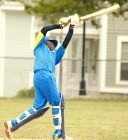
Cricket for Change and Cricket Brazil introduced the game of ‘Street20’ to two Favela communities demonstrating how the game can be used as a tool to bring young people and communities together. The initial visit will lead to a program being delivered in 2014 which has been supported by the Anglo-Brazilian Society with a grant of £5,000.

At the introductory sessions the young people’s faces and smiles belied the somewhat dangerous backdrop of their normal lives. The Anglo-Brazilian Society believe that their generous investment in the Favela Street 20 cricket program will allow young people to develop better relations with police and each other.

Oliver Ballhatchet, Consul at the British Consulate-General in Rio said “This is a great offering from cricket Brazil and Cricket for Change. It is
great to see how a British game can be used to change the aspirations and attitudes of some of Rio’s most disadvantaged young people.”

The fact that cricket is not universally known in Brazil is a really positive aspect to the program. Young people in Brazil love football but also pick up on the negative aspects of the game. Cricket has the ability to inject real respect and positive behavior from the outset and to offer this in a deprived and challenging environment will be a real forward step for the Favela communities in Rio.

CEO of Cricket Brazil Vincent Bastick stated, “The initial part of this project has gone fantastically well. The two Favela communities have welcomed our project and we have already been contacted by two more who want to be a part of it.”

Initial sessions in Favelas in São João and Fallet, Santa Teresa, have proved very popular with up to 50 young people having the opportunity to take part and build enthusiasm for this program.

Andy Dalby-Welsh Director of Operations at Cricket for Change said, “Our initial visit has been so well received. Once the regular sessions start taking place our aim is to come and assist with a festival that brings different Favela communities together. We will also be delivering a ‘Street20’ leaders program that will create young leaders from some very disadvantaged backgrounds.”

Developing ‘Street20’ cricket leaders and ambassadors from within the community is a great way of moving towards a peaceful and positive future for young people.

Posted in Features, News | Tagged , , , , | Leave a comment

2013 Local Scene In Review

Did We Progress?

Compiled by Dyon Ravello

Spring

The spring began with much promise and the fresh foliage renews hopes. Darren Beazley took up reign at USACA as the stage-driver of American Cricket Futures. Asia Tribune T20 provided the season first challenge as Americas Cricket Academy fell at the hand of Challengers, who copped $4,000 first prize.

USA Senior Men blew a chance to advance to ICC world Division II. Following an impressive start with a vital victory over arch-rival Nepal. USA fell to Bermuda when it matter most, when a win would have guaranteed promotion. Australia/New Zealand 2015 in now out of reach. The ability to maintain a place in Division can be seen as a consolation.

Long Island City H.S. (LIC) retained PSAL Cricket title to become the first High School to win consecutive championships. LIC have now featured in the last three PSAL Finals. 

USACA opened Combine U-19 as the national youth selection prepared for ICC Americas Under-19 World Cup qualifiers. But it was the host Canada who clinched qualification ahead of USA. However there were some highlight with National senior Team batsmen Steven Taylor at the helm, a possible candidate for senior team leadership. So too was the discovery of Keifer Phil, a naturally talented Fast Bowler, who will still be eligible for the 2016 Under-19 World Cup

Indianapolis to host US National Men's Championship August 21-24 2014

Indianapolis to host US National Men’s Championship August 21-24 2014

Mayor Greg Ballard of Indianapolis, ensured that Indy was living up to its credo of being the “Home of World’s Amatuer Sport,” when the city successfully secured the US National Championships for the 2014-2016 seasons. NapTown will host the 2014 edition from August 21-24 reigniting American regional cricket rivalries. 

USACA got the money bag rolling when CEO Beazley signed off with sponsors Boom/ Boom, Smart Choice. USACA has now partnered with ESPN to air the National Championship Live!

Summer

Dragons retained the New York Police Department’s (NYPD), Police Athletic League (PAL) defeating arch-rival MMZ SuperStars. Dragons yet again overcame a pedestrian start to the summer arresting familiar foes. Like LIC and Dragons Queens South retained the coveted PSAL Mayors Cup. The PSAL zonal winners bettered, Queens North, Brooklyn and Bronx/Mahattan.

Canada continued its dominance over the Americans claiming the  Auty Cup for the third consecutive series. The Canadians who enjoy the pleasure of cricket as its National sport, would surely be proud of their acheivement against the typically “superior” Yanks.

Atlantic Region overturn the 2012 scoreline as they upstaged New York (2-1). Atlantic won the Under-25, and Under -19 affairs only to miss out on the Under-15’s. A year earlier New York were convincing winners in the Under-15, Under-18 but narrowly loss the Under-21 encounter.

In 2012 Panthers began a trend with was repeated by Imperial as they swept Brooklyn. Imperial met Diplomats in the finals of all three competitions and they showed who were the Kings of Kings in 2013.

Villagers were up to the Brooklyn standard as etched by Panthers and Imperial. Villagers claimed Metropolitan Cricket League’s League, and T20 as well as sharing the Roy Sweeney Knockout in a tie with Westbury.

Eastern American Cricket Association (EACA) Saw Big Apple CC and Richmond Hill CC leading the honors. Big Apple inflicted Richmond Hill’s only EACA Power 40 defeated of the season on the back of a hundred by skipper Zaheer Saffie to take the Title. Richmond Hill found consolation as they defeated ACS/Everest to lift the Blitz T20 crown.

In their first season Jazba, Punjab and Warriors swept the American League, taking the League 40, Knockout and Twenty Competitions. Not a bad deal for teams making the switch.

USACA launched its grassroots program Come Lets Play USA, in partnership with International Cricket Council (ICC). Come Let’s Play will target Elementary and Middle Schools students as cricket pushes to become part of American sporting landscape. Come Let’s Play is not only geared towards the recreational aspect of the game but focuses on the development of potential world class players, players who can stake their claim on the international stage.

Fall

Custom, Sublimation, Screen-Print and Embroidery Team Kits Now Available Call (530) 6VELLO4 To Pre-Order Today

Custom, Sublimation, Screen-Print and Embroidery Team Kits Now Available Call (530) 6VELLO4 To Pre-Order Today

United States of America Cricket Umpires Association (USACUA) hosted its second annual memorial match against the New York Cricket Region (NYCR). Like a year earlier the admins took first strike post a competitive score of 146. The Umpire were equally up to the task as they batted their opponents out of the game with a solid 41 from D. Ravello and a romping 50 by Jacob Emmanuel as the umpires complete a convincing 7 wicket win. The Umpire now hold a two match unbeaten record going into 2014.

NY Tigers donned the second Twenty/20 crowned of the season as the turned back MMZ Superstars to lift the Millat T20 title. NY Tigers led by household names like Jermaine Lawson, Akeem Dodson, and Rashaad Marshall overcame the challenge for Azurdeen Mohammed’s men.

USACA completed its governance review with a new structure forwarded as recommendation. USACA’s current model is club-based membership, with the new ideal being geared to individual membership.

Team USA had another shot at gracing the world stage when they traveled to the World Twenty/20 Qualifier in Dubai. Needing to win a minimum of three from seven matches, Team USA notched a solitary win against arch-rivals Canada on the opening day. There would be no reigning glory on the road to Bangladesh as Team USA crashed to an abysmal 15th place at the tournament.

US Under-15 resumed at Southern California Cricket Association with the Western Conference Tourney. North West region copped the winners prize as Central West finished second to move on to the national tournament to be contested June, 2014 at Woodley Complex. The top two regions from the Eastern Conference will join the westerners at the national event.

US Open closed out the year with Smart Choice clinching the top prize. Smart Choice a national team sponsor, loaded with a number of national talent were tournament favorites and lived up to be billing. Steve Massiah captured his third US Open crown, in his third visit to the final.

The velloCricket Journal Honor Roll 2013

Teams:

Long Island City High (PSAL), Dragons, (NYPD), PSAL Queens South (NY Mayors Cup), Villagers (NYMDCA), Richmond Hill, Big Apple (EACA), Imperial (BCL)

Team of the Year: Villagers (NYMDCA)

Player of the year: Trinson Carmichael (Diplomats SC)

Trinson Carmichael

Trinson Carmichael command the New York scene with both bat and ball.

People/Community:

USACUA, NYCR, PSAL, Parks Department, New York Cricket, Bedessee Sporting Goods, S&A Roti, Guyana West Indian Grocery, Trinidad and Tobago Cricket Legion.

Mark Audain, Carl Bennett, Rayo Sankar, Kerk Higgins, Sheik Mohammed, Jerry Persaud, Danesh Deonarine, Lenny Achaibar, Sam Soopersad, Salman Sheikh

Honor Roll:

Batsmen Of the Season: Sudesh Dhaniram

Wicket Keeper of the Season: Akeem Dodson

Pacer of the Season: Dominic Audain

Spinner of the Season: Kumar Nandalall

Bowler of the Season: Kumar Nandalall

All-rounder of Season: Trinson Carmichael

Emerging Player of the Year: Keifer Phil

Player of The Year: Trinson Carmichael

Team of the Year: Villagers CC

Personality of the Year: Darren Beazley

vc-first-logo5

Posted in American Cricket League, Brooklyn Cricket League, Commonweath Cricket League, Dyon Ravello, Eastern American Cricket Association, Headlines, Metropolitan Districts Cricket Association, New York Cricket League, New York Cricket Region | Tagged , , , , , , , , , , , , , , , , , , , , , , , | Leave a comment

Two-tier Test system, my foot!

What is stopping teams like Zimbabwe playing first-class cricket against Ireland, Afghanistan and other Associates

By Martin Crowe

Talk of a two-tier system for Test cricket is shallow. To confine West Indies and New Zealand to the outhouse is disrespectful and ignores the great history that has built up over a century or more. Did we hear of a two-tier system when Australia were drowning in the mid-1980s? Or when England were being smashed by West Indies in Test after Test, series after series? Or when India weren’t even in the top four during the same decade?

South Africa are excused, for they were deep in isolation, yet when they came back in 1991, did we suggest they try out in the second division first? During the ’80s, West Indies totally dominated, while New Zealand were unbeaten at home for 12 long years, as well as winning away in England and Australia. For that, they command respect, through thick and thin.

And yet, we hear from the likes of even Rahul Dravid, that a two-tier system is a good idea. With respect to Rahul, what is good about it?

This doesn’t feel right. It’s not right to abandon upstanding nations, countries that have given their all to prop up the game, to cast them adrift. It is so disappointing that the ICC has failed again to find the right formula for showcasing Test cricket and crowning a champion on a regular basis.

The very least they can do is arrange for the top two teams to play and allow someone to raise the mace. Someone. The problem for those languishing in fifth place and below is that those bottom teams will never get back the points they need, over at least two, probably three, years to contest for a place in a final, leaving the same teams to compete for the title. This is not what a competition is about.

Competition in sport is normally held annually, or in the case of the traditional Ryder Cup, every two years. Following a normal competition, in the off season, teams can regroup and come again, trying to find the recipe for the crowning glory at season’s end. The winning team tries to recapture that winning way and repeat their success. Of course there are no off seasons in cricket. It’s so ridiculously complicated, especially with three formats to juggle, that a team can hardly catch its breath before it’s asked to go on another meaningless tour, or play another fruitless series of one-dayers.

There are eight very proud cricketing nations that have earned kudos and respect the world over for their longevity and endeavour, over the course of the game’s history. I don’t include Bangladesh, with respect, as they haven’t played enough, nor won enough since their introduction. Nor Zimbabwe, with their political interference and lack of resources. The eight major teams deserve the chance to bounce back from difficult times. Who knows, maybe England are about to enter a period of sheer hell. Will they be abandoned the way that folk are talking about demoting New Zealand and West Indies?

Orignally posted on http://www.espncricinfo.com

Why can’t the four Test series that invariably take place every November to February between the top eight teams count as the quarter-finals of a competition, culminating in two semis and a grand final?

Sport is mostly cyclical, despite the long period that both West Indies and New Zealand have been down and out. Instead they need support and encouragement, not a kick in the proverbial. Talk of promotion and relegation is bizarre given there are only eight teams that have ever played Test cricket with any degree of success.

If Ireland, Afghanistan and others are to be encouraged to play Test cricket one day, they should start by playing first-class cricket against the likes of Bangladesh and Zimbabwe. Surely this is the prerequisite to stepping into the cauldron of the elite. Bangladesh have made the mistake of not playing enough first-class cricket to prepare their players. And lately New Zealand and West Indies have too often focused on the shorter forms, either internationally or domestically, ignoring their Test priorities and losing their mojo in the process. The solution is to remove the pointless T20 internationals, and the repetitive one-dayers; I can guarantee, their Test form will improve.

If it’s not done, then Test cricket will die. The big four will survive and even flourish, however the others will wilt away and be gone for good as new generations learn a different way. A way that is not cricket, only a caricature of it. What is a sport, or format of it, when only four or five teams can play it?

Why has the World Test Championship failed to gain traction? Television and financial revenue first come to mind. It’s mighty expensive to televise Tests, let alone get folk to come along in a cash-strapped world. Only the Ashes Tests truly fill grounds and generate good revenue. Why? Because the history of the series demands it. That’s why a Test competition needs to happen. There won’t be a perfect remedy here. Everyone needs to be flexible and open-minded and allow Test cricket a chance to show it can crown a champion regularly.

Here are some questions I need to ask. Why can’t the four Test series that invariably take place every November to February between the top eight teams count as the quarter-finals of a competition that culminates in two semis and a grand final? Why can’t those with the better ranking go through to the semis or the final, if the game is drawn? Why can’t it be mixed up with the top four playing away against the four lower-placed teams (knowing they have a higher ranking and need to be beaten outright to not go through) to create a true challenge and encourage unpredictability? Isn’t this what will captivate the watching audience? Is it not worth a go, and as it unfolds, can’t adjustments be made as the purpose becomes clearer?

Shall we just sit idly by doing nothing, or start disrespecting teams by placing them in a back paddock, abandoned, to slowly but surely die as the funds and enthusiasm dry up? This is all becoming a playground where the bully boys decide the punishment. It’s sickening.

Let’s pay dues to all those who have served the game well. Let’s include them in all that we do. Let’s keep it simple and meaningful. Let’s protect the very format that exudes, clarifies, portrays, recognises and exemplifies the true nature of cricket. And let’s grow it over time.

The Test Cricket Open, an eight-team knockout competition staged annually or every two years, deserves a run, including those long-standing nations that have served the game so well.

Posted in Features, News | Tagged , , , , , , | Leave a comment